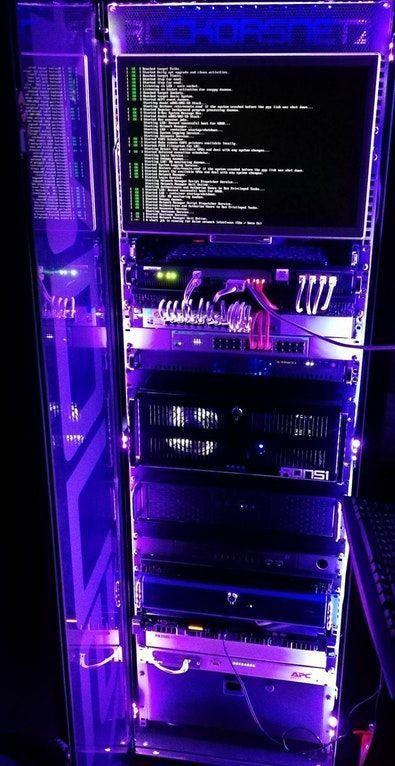
What is Server Management?
Server Management encompasses all the tools, tasks, and processes required to administer, monitor, and maintain a server (whether physical, virtual, or cloud-based) to ensure it operates at peak performance, remains secure, and experiences zero to minimal downtime. It is the core responsibility of System Administrators (SysAdmins).
Core aspects of server management include:
OS Administration: Managing updates, configurations, and environments for Linux distributions (e.g., Ubuntu, Fedora) or Windows Server.
Resource Monitoring: Tracking hardware utilization such as CPU load, RAM capacity, and storage disk space.
Backup Management: Implementing automated backup schedules for databases and applications to prevent data loss.
Security Hardening: Configuring firewalls, applying encryption (e.g., LUKS2), and patching vulnerabilities to shield the server from cyber threats.
Key Benefits of Effective Server Management
Minimized Downtime & High Availability: Proactive monitoring allows administrators to detect anomalies—like memory leaks or database hangs—and resolve them before they cause service disruptions.
Robust Security & Compliance: Regular updates and security patching ensure that the server is protected against the latest malware, ransomware, and unauthorized access attempts.
Optimized Performance: Tuning server configurations, clearing accumulated log files, and optimizing database queries ensure fast response times for hosted applications and websites.
Reliable Disaster Recovery: Proper management guarantees that valid, up-to-date backups are always available, allowing quick restoration of operations in the event of a critical failure.
Cost Efficiency & Scalability: Continuous tracking of resource consumption helps businesses accurately forecast infrastructure needs, allowing them to scale up or scale down resources without overpaying for unused capacity.
Systems Engineering & Server Management Services
1. Server Provisioning & OS Deployment: Installing, configuring, and hardening enterprise server environments, focusing on robust open-source operating systems and Linux distributions (e.g., Ubuntu Server, Fedora, Rocky Linux) as well as Windows Server architectures tailored to business requirements.
2. Database Administration (DBA) & Tuning: Deploying and configuring high-performance database management systems like PostgreSQL and MySQL. Optimizing query execution, indexing architectures, and database routines to guarantee maximum responsiveness for core enterprise applications (such as ERP environments and e-commerce platforms).
3. Advanced Server Hardening & Security: Enforcing rigorous security perimeters to protect architecture against cyber threats. This includes setting up network firewalls (UFW/IPTables), establishing secure SSH key-based authentication, and implementing full-disk or partition encryption via LUKS2 to safeguard sensitive local data against unauthorized physical access.
4. Automated Backups & Disaster Recovery (DR) Planning: Writing custom automation scripts to schedule routine, encrypted backups of databases and core system configurations to offsite or secondary cloud storage. Designing swift disaster recovery playbooks to guarantee business continuity with minimal Recovery Time Objectives (RTO).
5. Proactive Infrastructure Monitoring & Metrics Tracking: Integrating continuous monitoring agents to track live server health metrics, such as CPU utilization, memory thresholds (e.g., 32GB RAM parameters), and storage disk I/O. Proactively patching memory leaks or service deadlocks before they degrade end-user performance.
6. Routine Maintenance, Patch Management & Log Rotation: Conducting systematic system updates to apply critical security patches and software upgrades. Architecting automated log rotation routines to clean up accumulated telemetry and server logs, preventing abrupt storage exhaustion and maintaining optimal runtime conditions.