After more than 5 years since one of the most severe technological sanctions in modern times, "Huawei" stands today at a crossroads between exceptional resilience and fierce global competition, while some regions of the world still rely on its technologies. However, the Chinese company has rearranged its strength internally and built a parallel technological ecosystem. It continues to race against time to keep pace with the restrictions that redrew the map of its global business, turning Huawei's story into a true test of technology's ability to survive amidst the most intense digital geopolitical conflict the world has witnessed.
"Huawei" After 5 Years of U.S. Sanctions
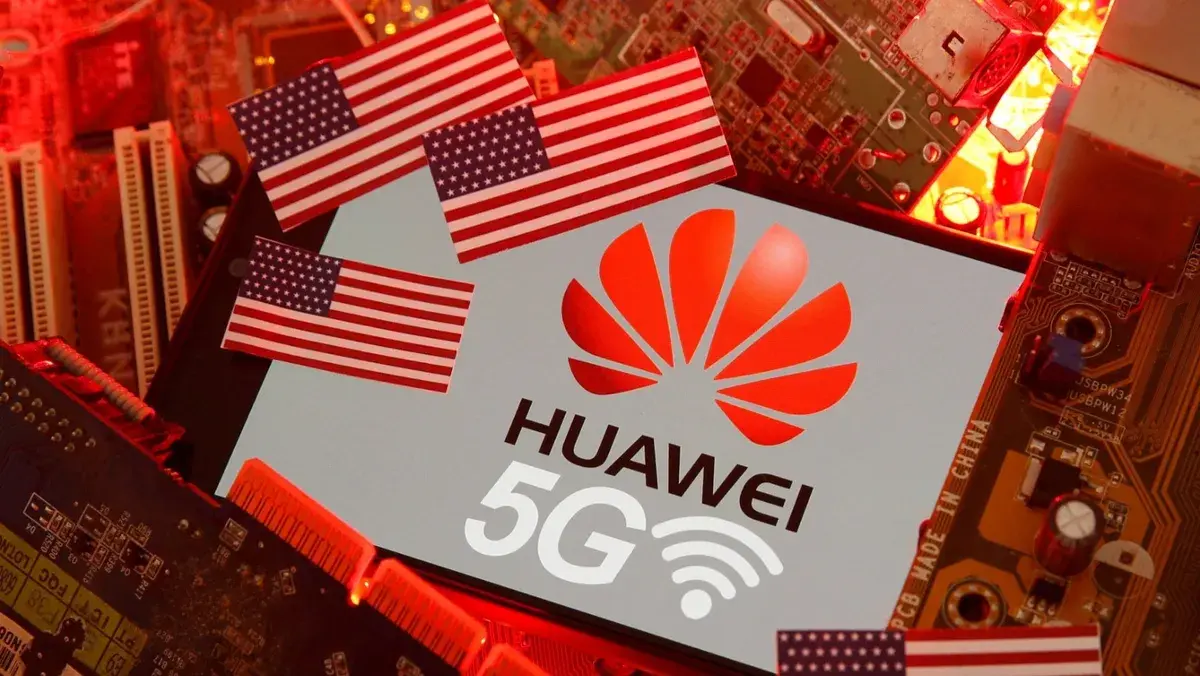
The 2012 U.S. House Intelligence Committee report, which revealed Huawei's unfair practices and its relationship with the People's Liberation Army, served as an early warning that prompted the company to take proactive measures, according to an October 2025 report by the Information Technology and Innovation Foundation. Since then, it began diversifying its revenue sources by expanding into the domestic market in China. On May 16, 2019, the U.S. Department of Commerce added Huawei and its affiliates to the "Entity List," prohibiting access to U.S. technology and software (such as Google services and Android) without a government license.
Year
Domestic Revenue ($bn)
Global Revenue ($bn)
Domestic Revenue %
Global Revenue %
2017
45.2
50.5
44.2%
49.5%
2018
56.2
51.6
52.7%
48.4%
2019
73.4
51.0
59.0%
41.0%
2020
84.7
44.4
65.6%
34.4%
2021
64.4
34.6
65.0%
35.0%
2022
60.3
35.6
63.0%
37.0%
2023
67.3
33.27
67.0%
33.0%
2024
86.7
34.8
71.3%
28.7%
Source: Official Huawei Annual Reports (2017–2024)Note: Values converted to USD based on the official exchange rate at the end of each year.
Ahmed Banafa, Professor of Engineering and Network Security at San Jose State University, points out that Huawei survived the toughest phases of sanctions by building domestic chip manufacturing capabilities and reclaiming the lead in the Chinese smartphone market, alongside expansion in Asia and the Middle East, versus losing influence in Europe and North America.
Assem Galal, Management and IT Consultant at G&K, offers a similar view, highlighting strong performance internally vs. weakness in foreign markets. He notes the 22.4% revenue jump in 2024, an 18% market share in China in Q2 2025, and the success of the "Mate 60" and "Kirin 9000s." However, globally, profits dropped by 28%, market share fell to 4%, and the company exited major 5G markets, with 71% of its revenue now being domestic.
Dexter Thillien, Lead Technology and Telecoms Analyst at the Economist Intelligence Unit, believes Huawei has become weaker globally due to its lack of access to the Google Play Store (outside China) and its exclusion from many western mobile equipment markets. He noted, however, that the company remains present, whereas sanctions could have been a much larger existential threat had the company not diversified and utilized state support to remain relevant within the Chinese domestic market.
NVIDIA Voices Concerns Over Huawei’s Growing Capabilities
A senior source in a U.S. Congressional committee stated that NVIDIA CEO Jensen Huang discussed concerns regarding Huawei's growing AI capabilities. Huawei survived partly due to Chinese government support and business diversification (smart vehicles, cloud computing, etc.), being encouraged to develop its own operating system (HarmonyOS) and the domestic "Kirin 9000S" chip.
According to a study by MERICS, the company received approximately $46 billion in loans and credit facilities from Chinese state lenders, plus tax exemptions estimated at $25 billion between 2008–2018. However, Huawei stated in 2019 that total R&D subsidies from governments inside and outside China over the past decade amounted to less than 0.3% of its total revenue.
Galal noted that raising R&D spending to 20.8% of revenue was pivotal for developing the OS running on over a billion devices, collaborating with SMIC to produce 7nm chips via DUV technology, and developing "Ascend" processors. Banafa added that early preparation for technological independence and pivoting toward markets not subject to U.S. pressure provided strong immunity.
National Security or Part of a Tech Hegemony Struggle?
Huawei has become a concern for Washington due to fears of espionage, alleged intellectual property violations, and the company's ties to Chinese laws requiring cooperation with intelligence agencies, according to a February 2023 Council on Foreign Relations report. The report stated that the Chinese state's influence over private firms and the founder's Communist Party membership enhance these suspicions. Washington's fears center on infrastructure for espionage; a 2022 FBI investigation revealed its equipment could disrupt U.S. military communications, including those related to the nuclear arsenal.
Banafa explained that while the U.S. narrative links the issue to national security, its core reflects a tech leadership struggle between Washington and Beijing. Galal pointed to a mix of security and strategic concerns for "technological decoupling," pressuring allies, and forming the "Chip 4" alliance. Thillien places the confrontation in an explicit geopolitical context, noting that Huawei’s rise in telecom equipment made it the focal point of competition.
Huawei vs. Apple and the Map of Tech Influence
The smartphone market in China is witnessing fierce competition between Huawei and Apple. The Chinese company reclaimed first place with an 18% share in Q2 2025 (Canalys data), but Apple jumped to 25% in October 2025 for the first time in 3 years (Counterpoint Research). Galal explains that the world is heading toward two systems: a Western one led by the U.S., and a Chinese one led by Huawei, with HarmonyOS expanding to 16% inside China and 4% globally.
Huawei as a Tool of Influence in the Middle East
According to the U.S.-China Economic and Security Review Commission, Huawei has partnerships with about 11 Middle Eastern countries, most notably Egypt and GCC states, covering 5G, cloud computing, smart cities, and data centers. Galal sees Huawei as a Chinese tool of influence in the Gulf, benefiting from competitive pricing and alignment with digital transformation strategies. Thillien notes that technology has become a geopolitical tool, with the Middle East serving as an arena where both the U.S. and China seek balance.
Huawei’s Independence by 2030
According to TechInsights, Huawei's "Mate 60" uses a 7nm chip, while Western companies like Qualcomm and Apple have used 3nm chips since late 2023, indicating a tech gap of 3–5 years. Thillien notes that Chinese firms still rely heavily on older ASML machines from the Netherlands. Despite this, the Chinese government is determined to close the gap, viewing it as a national strategic security issue. Galal expects near-complete independence within China and friendly markets by 2030, though Banafa warns that controlling the advanced chip manufacturing chain remains the greatest challenge.
Bloomberg Intelligence and TechInsights estimates suggest that Huawei’s attempts to independent from Western tech raise domestic chip manufacturing costs by 20%–35% compared to global suppliers, with yield rates 40%–50% lower than companies like TSMC. Banafa warns of slowing next-gen chip development due to equipment difficulties and high costs. Thillien points to the risk of banning ASML equipment or EDA software, versus the potential for a Chinese response through strategic tools.
Is the Huawei Model Replicable?
Galal suggests that strategies like raising R&D spending and diversifying during crises can inspire emerging markets, but Huawei's success factors depend on difficult-to-replicate advantages like the massive Chinese market and significant government support. Thillien agrees, noting it would be very difficult for any company to start from zero and repeat Huawei's achievements, even with massive state backing. Banafa views the experience as an example of survival through innovation, but not a globally reproducible model.